New Senior Deductions, Social Security Changes, and What to Expect from the Latest Federal Tax Reform
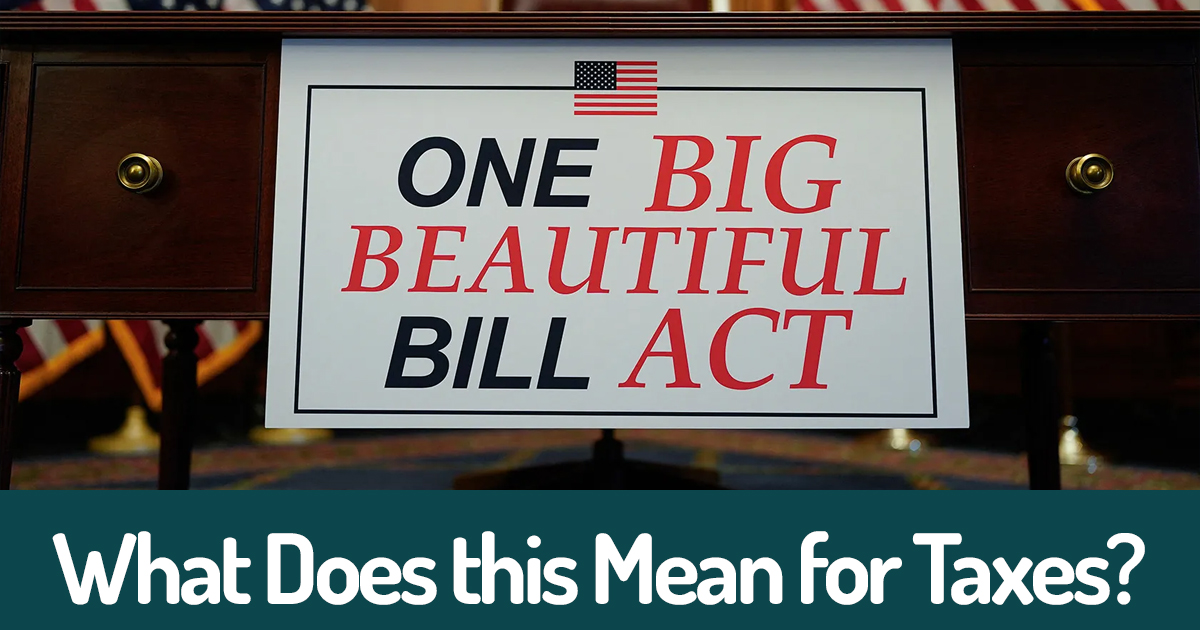
On July 4, 2025, the federal government enacted the One Big Beautiful Bill Act (OBBBA), a significant piece of tax legislation designed to reform multiple areas of the tax code. While the bill includes a wide array of provisions impacting individuals, retirees, and businesses, one of the most widely discussed changes is a temporary tax deduction for seniors receiving Social Security. However, as with many tax provisions, the details are more nuanced than headlines suggest. Below is a summary of the most important elements, including our interpretation of the senior deduction and its practical implications.
A Closer Look at the Senior Deduction
Starting in tax year 2025, the law introduces a new $6,000 deduction for qualifying taxpayers aged 65 and older. This deduction is designed to provide limited relief to lower- and middle-income seniors, and it is currently set to apply only through the 2028 tax year.
- To qualify for the full deduction, an individual must be 65 or older by the end of the tax year and have a modified adjusted gross income (MAGI) of $75,000 or less.
- For married couples filing jointly, the MAGI threshold is $150,000. The deduction phases out for taxpayers who exceed these income limits.
- While this provision has been widely reported as a change to Social Security taxation, that interpretation is somewhat misleading.
- The deduction does not eliminate or replace the existing taxation formula for Social Security benefits.
What Remains the Same for Social Security
The current rules for taxing Social Security benefits remain unchanged. Under those rules, individuals with total income below $25,000 (or $32,000 for couples) do not pay federal income tax on their Social Security benefits. For those with income above these thresholds, up to 85 percent of benefits may be taxable, depending on total income and filing status.
The new senior deduction may help reduce total taxable income for qualifying individuals, which could in turn reduce the amount of taxable Social Security income. However, as of now, the IRS has not issued guidance on how the deduction will be implemented. It is not yet clear whether the deduction will be applied directly to Social Security benefits or to adjusted gross income more broadly.
Additional Provisions to Be Aware Of
The OBBBA includes numerous other tax-related provisions that may affect taxpayers beginning in 2025. Among the more notable changes are the following:
- An increase in the Child Tax Credit to $2,200 per qualifying child under the age of 17, with inflation adjustments beginning in 2026.
- A permanent extension of the Qualified Business Income (QBI) deduction, with expanded phase-out ranges for higher earners starting in 2026.
- An increase in the estate and gift tax exemption to $15 million, effective for decedents and gifts made after December 31, 2025.
- A new deduction for qualified overtime and tip income, available through 2029, with income-based phaseouts.
- Modifications to the State and Local Tax (SALT) deduction cap, including gradual increases through 2029.
- A permanent extension of bonus depreciation at 100 percent for eligible property placed in service after January 19, 2025.
- Expanded credits for employers who provide childcare, paid family and medical leave, and qualified business meals (with exceptions).
These changes reflect a mix of temporary and permanent updates. Some provisions represent a continuation of previous stimulus and tax reform efforts, while others are entirely new.
Preparing for the 2025 Filing Season
While most of these changes are not effective until 2025, now is the time to begin preparing. Individuals approaching age 65 should evaluate their income levels and consider how the new deduction may affect their future tax liabilities. Retirees with multiple sources of income—including pensions, IRA distributions, and Social Security—may especially benefit from personalized planning to remain within the income thresholds that qualify for the new deduction.
Business owners may also find new opportunities for tax savings under the expanded QBI deduction and new employer credits. Strategic planning throughout the remainder of 2025 will be key to maximizing these benefits.
At Not Just Numbers, our team is currently completing continuing education on the new legislation and will be ready to advise clients on its implementation by mid-November. We will provide ongoing updates as the IRS releases guidance, particularly on how deductions such as the new senior provision will be administered.
NOTE: Please connect with Not Just Numbers about questions in November, after we have our necessary training.
As always, our goal is to help you make informed financial decisions and take full advantage of the benefits available to you under current law.
Visit us at https://njnumbers.net or call our office at 540.628.0464.
We’re here to help you navigate what’s next—with clarity, confidence, and accuracy.